
16 April. The recently announced “Auckland Deal” between Prime Minister Christopher Luxon and Auckland Mayor Wayne Brown aims to better coordinate infrastructure, housing, transport, and economic development across the region. While the agreement has been presented as a way to boost Auckland’s productivity, questions are already being raised about its immediate impact—particularly for communities in Rodney.
A key component of the Auckland Deal includes an Infrastructure and Transport strategy. This is an Auckland 30-year strategy plan on projects like the North-West Rapid Transport (busways), the Botany-to-Airport link, the Warkworth to Wellsford expressway, and Mill Road (Manukau). 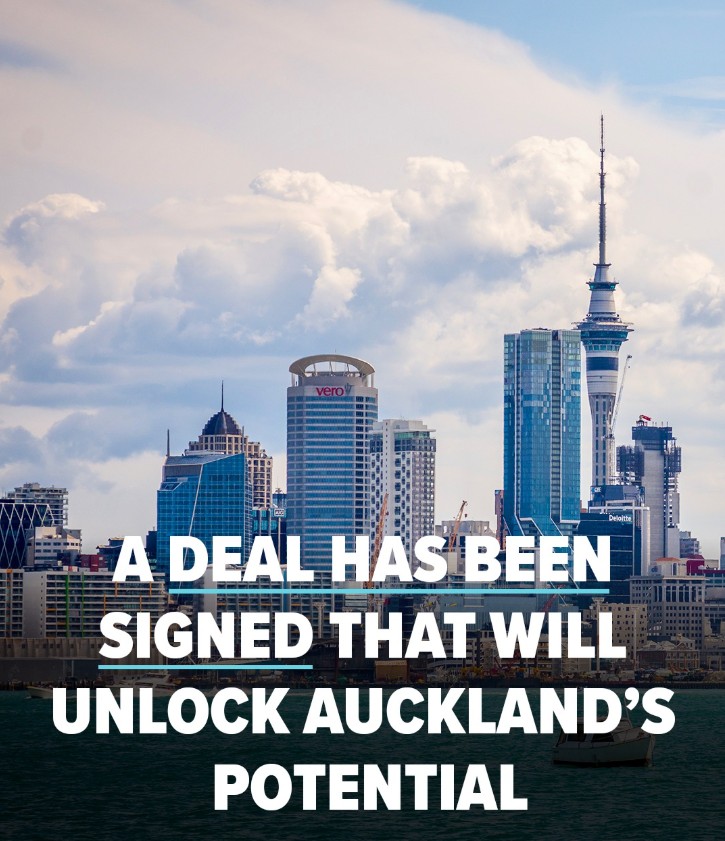
However, critics note several omissions, including the lack of passenger rail extensions to Huapai or Helensville and no clear commitment to improving rural roads.
In fact, reading the fine print the agreement specifies that no additional funding is expected from central government budgets for the first three years of the Deal. That leaves one wondering just how much of a difference the Auckland Deal will really make for Rodney’s residents and ratepayers.
The Deal does not ease congestion on State Highway 16 through Kumeu by accelerating building of the bypass, so traffic bottlenecks will remain a daily frustration with still no clear timeline for relief.
It does not improve Town Centre or District Planning for growth towns like Warkworth. Rural settlements like Wellsford, Helensville, Puhoi, Kaukapakapa and the like see no additional benefits.
If over time, any opportunities arise to include direct benefits for Rodney into the Deal, then the Rodney Local Board and myself will certainly be pushing for them together with the local Member of Parliament.
Another notable exclusion is the government’s proposed 4% rates cap. That means the Auckland Council can still increase rates well above the rate of inflation.
The New Zealand government promised to introduce a 2% to 4% cap on annual council rate increases, starting in 2027 and fully implemented by 2029. While popular with voters, the cap faced pushback from Auckland Council worried about infrastructure and service cuts.
Personally I agree with a rates cap. Continued large rates increases are simply not sustainable.
With rising living costs already placing pressure on households, and without immediate funding or stronger cost controls, the Auckland Deal risks being seen as more aspirational than practical.